
It was the author’s plan in 1965 – he was then 18 years old – to use the pen name Datu Gatonda, but in 2008 he abandoned the plan. And then in January 2012 he decided to use the pen name for the subtitle of his first book.
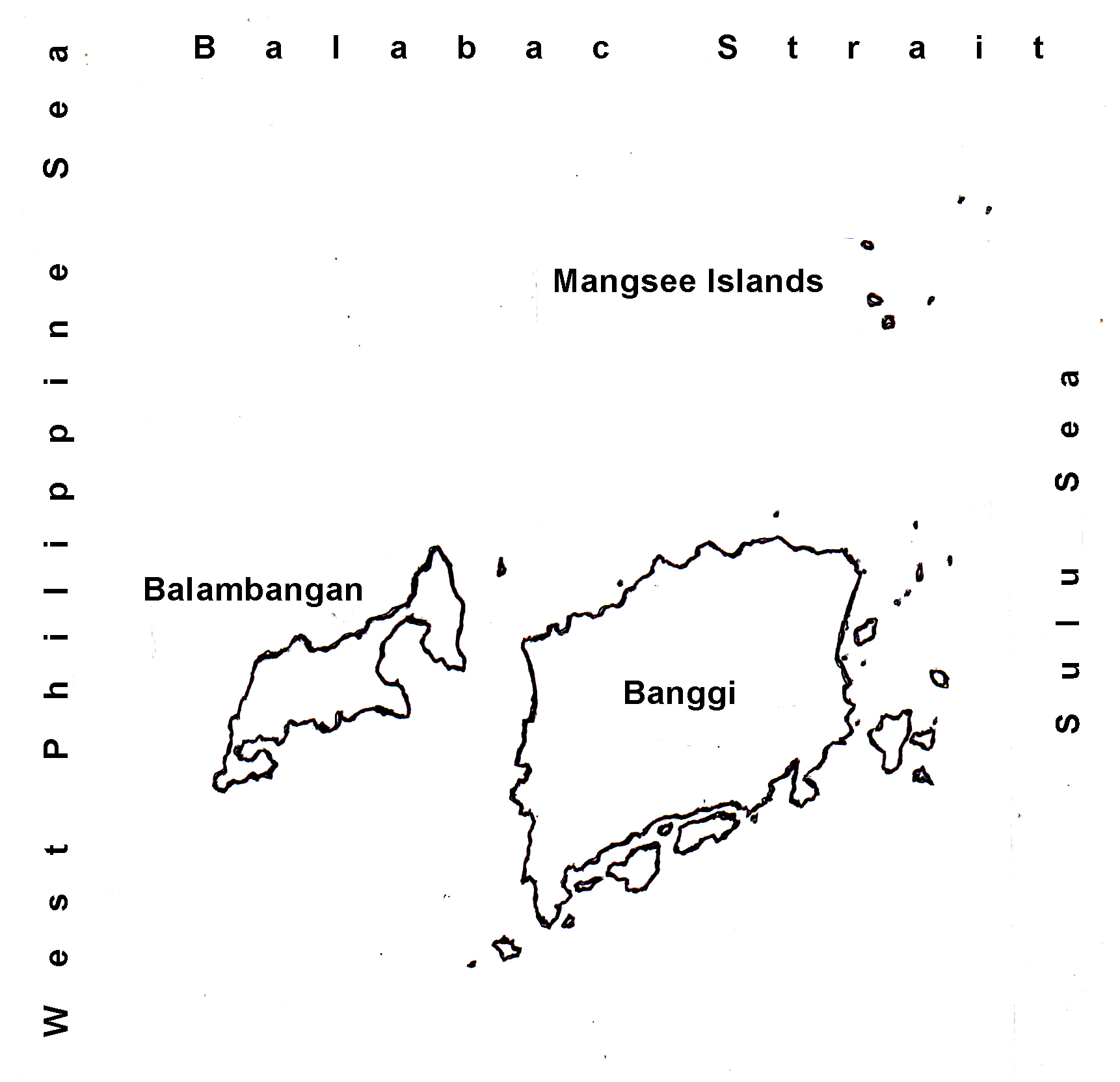
The author himself designed the book cover and illustrated the map of Bitondo. New photos in the book are from photographers Ramir Clave and EJ Bascuguin.
The author launched the book on July 27, 2012 by presenting its first two complimentary copies to Mayor Herbert M. Bautista of Quezon City (a former capital of the Philippines) and to the city’s public affairs and information services office head Greg Bañacia. The author also sent a copy for President Benigno S. Aquino III through the office of Executive Secretary Paquito N. Ochoa, Jr. In a letter to the author dated January 2, 2013 Malacañang (the official residence of the Philippines’ president) said: “His Excellency Benigno S. Aquino III expresses his gratitude for the copy of your book.. We thank you for your solidarity with your government and wish you continued success in your endeavors.” The letter was signed by the assistant head of the Malacañang correspondence office.
Balakonda, subtitled Datu Gatonda’s Project, is a book authored by writer-peace advocate Mencio Galang, a 2010 Nobel Peace Prize nominee and leader of a non-violent group that declared its independent and sovereign republic called Bitondo in 1976. The book was self-published and launched in Quezon City, Philippines in July 2012 .
Balakonda is Galang’s first book. Its registered publisher is Indopoli Book Publishing, a sole proprietorship whose registered owner is the author himself.
New history
Galang describes Balakonda as “a modest introduction to a new history: the now-it-can-be-told saga of the Austronesian-Kayumanggi people of the Indo-Pacific.” It is the world’s first book of decodopody and Kayumanggi history, he says in the book’s cover and foreword.
Decodopody is a word coined by the author to identify and describe the methodology he used in reconstructing portions of the hitherto unknown pre-colonial past of the people of the Philippines. Decodopody, also spelled dekodopodi, simply means “decoding the apodiks,” or extracting history from the apodiks or words which are clues to the unknown or forgotten past. Galang also coined the word apodik to honor his Austronesian-Kayumanggi ancestors. Literally, apodik means “the elders’ word or dictation.” An apo is the word for “an elder or ancestor” in many Philippine languages.
Galang considers decodopody a new science. His friends also call it the Galang methodology or the Galang way of reconstructing ancient Kayumanggi history.
The 89-page Balakonda will have a second edition which will be an expanded edition, according to Galang. He intends to reveal in the second edition all his findings and conclusions from his October 1961 – December 1986 one-man study of clues to the pre-colonial past of the Philippines and Borneo.
In the first edition, Galang points out that: The first Austronesians were the first boat people of world. They were the first to make sea-crossing migrations to build a new homeland in the Indo-Pacific or East Indies. They were the builders of the first archipelagic empire that 3,000 years later became known as the Lupang Kayumanggi when the islanders were already proudly identifying themselves as the Kayumanggi, which the Spanish conquistadores later called the indios. That Lupang Kayumanggi included all the islands around the Sulu Sea from Batanes in the north to the whole big island of Borneo in the south, and also the Spratlys and the Scarborough Shoal. Their saga of explorations and migrations from the Asian mainland was man’s first history-making in the Pacific, as recorded in Philippine languages. Being a recorded past, their saga therefore is history, no longer pre-history, says Galang.
Austronesian-Kayumanggi languages in the Philippines are rich in word clues to the pre-colonial past of the Filipinos, from which we can base today a reconstruction of Kayumanggi history, according to Galang.
An Austronesian-Kayumanggi homeland
Galang’s revelations in the first edition practically says that contrary to China’s “historic basis” assertion for its claim to islands, reefs and shoals and practically the whole of the West Philippine Sea (or South China Sea), the Chinese were definitely not the first to reach and claim those areas as part of their empire. “China should stop fooling the world,” he says. He insists that the people of the Philippines now have a recorded past or Kayumanggi history – which is no longer a pre-historic past – to prove that the first Austronesians’ homeland in the Indo-Pacific included what is now the disputed Scarborough Shoal, the Spratly-Reed Bank area and the Filipinos” exclusive economic zone (EEZ) in the West Philippine Sea. In other words, he says, from circa 5000 BC and until the end of World War II, no island or any landform in the West Philippine Sea near Luzon and Palawan had ever been a Chinese possession; the people of the Philippines inherited those islands and landforms from their Austronesian-Kayumanggi ancestors.
The decodopodic history unveiled in the first edition is just the tip of the iceberg, says the author. The second edition, he also says, “will completely demolish the myth that the Chinese were the first to reach and claim the Scarborough Shoal, Spratlys and other landforms in the West Philippine Sea near Luzon and Palawan.
But Galang says he will publish the second edition only after the Philippine government has officially recognized the Singapore-size Kayumanggi Republic of Bitondo as an independent and sovereign state.
Bitondo the Kayumanggi Republic
“Keep Bitondo Kayumanggi!” is the author’s appeal to all nationalists in the Philippines, most especially to members of the Bitondo Independence Campaign Community (BICC)
A free Bitondo is a monument to the first Austronesians, the author says.
Galang resurrected in 1973 the 1892 New Calamba project of the Philippines’ national hero Dr. Jose Rizal who wanted to resettle in British North Borneo the homeless Filipinos evicted from the Spanish friars’ farmlands in Luzon, especially those from Calamba, the hero’s hometown. Galang modified the New Calamba by proposing that Bitondo should be the new home for the homeless, and he wanted it to be a republic. Galang formally revived the hero’s dream project by leading a Bitondese-Filipino group on December 21, 1973 in organizing the BITODA, or Bayanihan para sa Independensya at Tunay na Demokrasya, the Bitondese citizens action union. Its members became known as Bitodists; they called their resettlement site “the Bitodist Tondo” or Bitondo. It was so named to also honor the indio insurrectos of 1896; Tondo was the birthplace of the Katipunan, the secret society that launched the Philippine Revolution against Spanish rule on August 23, 1896.
The BITODA declared Bitondo an independent and sovereign republic on January 7, 1976. As a community, the Bitondese people formalized the establishment of their republic by ratifying their Independence Constitution in 2010. The Constitution provides that the Kayumanggi Republic of Bitondo shall be the official name of this small state off the northern tip of Sabah, Malaysia. Its defined national territory comprises the Banggi-Balambangan Island Group, excluding Maliwali Island. The Mangsee Island Group south of Philippine province of Palawan is geographically a part of Bitondo, but both the 1976 Bitondese declaration of independence and the Bitondese Independence Constitution ratified in July 2010 recognize the Mangsee group as part of Philippine territory pending negotiations and a formal turnover of this island group to Bitondo.
Galang took his oath of office on July 15, 2010 as the first President of Bitondo under the republic’s 2010 constitution. Members of the BITODA and the Bitondo Independence Campaign Community (BICC) describe their peaceful freedom campaign since 1973 as a symbolic resistance to Malaysia’s neo-colonialism in North Borneo (Sabah). The BICC refers to all the Bitondese people inside and outside Bitondo as one nation and a united community.
The Bitondo Formula
In an open letter to the president of the Philippines featured in Balakonda, Galang proposed a Bitondo Formula that will enable the Philippines and Malaysia to finally resolve peacefully their territorial dispute on North Borneo or Sabah. The formula calls for a win-win solution to the North Borneo problem. Galang says that it will be a solution that is honorable or face-saving to both the Philippines and Malaysia if both parties will agree: That the Philippines will officially drop its territorial claim to North Borneo (Sabah) in exchange for Malaysian recognition of a free and sovereign Kayumanggi Republic of Bitondo. It will be mutually face-saving and honorable, he says, because both the Philippines and Malaysia will gain much in accepting and jointly implementing the Bitondo Formula.
Galang says that the Philippines and Malaysia must first agree to the Bitondo Formula so they can focus on their separate or coordinated defense buildup efforts to cope with China’s continuing bullying and expansionist intrusions in the West Philippine Sea. He says that building up the two countries’ defense capability is the best deterrent to Chinese intrusions and aggression.


 Bitondo
Leave a reply to Regino Ong Cancel reply